

Do Braces Hurt? What to Really Expect Before You Start
July 22, 2026

Almost every patient who walks into our Lake Worth office asks the same question, sometimes out loud and sometimes not. Do braces hurt? Parents ask on behalf of their kids. Teens ask because they've heard stories. Adults ask because they're already anxious about starting treatment later in life. It's the number one question we hear, and honestly, it's the right question to ask.
The honest answer is that braces can cause temporary soreness or mild discomfort, but they should not be painful. Soreness and pain are not the same. As your teeth begin to move, it's normal to experience some tenderness or pressure for a few days. In this guide, we'll explain what to expect, why it happens, and how we help keep our patients comfortable throughout treatment.
At Parsons Orthodontics, board certified orthodontist Dr. Tetyana Parsons has guided thousands of patients through orthodontic treatment. This guide reflects what we tell our patients at their consultations, so you'll know what to expect long before your first appointment.
Key Takeaways
- Braces create gentle pressure, not sharp pain. Most patients describe the sensation as tightness, tenderness, or mild soreness rather than pain. That gentle pressure is how braces move your teeth into healthier, better-aligned positions.
- The first few days are usually the most noticeable. It's normal to experience some soreness for about 3 to 5 days after your braces are placed. For most patients, the discomfort fades quickly, and within a week or two, braces simply become part of everyday life.
- Today's braces are more comfortable than ever. Modern brackets, advanced wire technology, and more precise treatment planning have made orthodontic treatment significantly more comfortable than it was years ago. Many stories you've heard from parents or grandparents reflect older techniques, not the experience most patients have with today's orthodontic care.
What Does Braces Discomfort Actually Feel Like?
The word "pain" can be misleading. When patients ask whether braces hurt, they're often imagining sharp, severe pain. In reality, what most people experience is temporary soreness, tenderness, or pressure, not pain. There is an important difference.
For most patients, the sensation is best described as pressure or tightness, as though the teeth are being gently pushed. Some notice mild tenderness when biting into firmer foods, while others experience a dull ache that comes and goes during the first few days after braces are placed or adjusted. The inside of the cheeks and lips may also feel slightly irritated until they become accustomed to the brackets.
A good way to think about it is the soreness you might feel after returning to the gym following a long break. Your muscles may feel tender the next day, not because you've injured them, but because they're adapting to a new challenge. Braces create a similar response. The gentle forces that move your teeth can cause temporary soreness as the teeth and surrounding tissues adjust.
What you should not experience is sharp, severe, throbbing, or persistent pain. Orthodontic treatment moves healthy teeth using light, controlled forces and should not cause intense dental pain. Severe tooth pain is much more commonly associated with conditions such as tooth decay, an abscess, or another dental infection than with braces themselves. If you ever experience severe pain or anything that doesn't feel right, let us know. We'll evaluate the cause and make sure everything is progressing as it should.
Why Do Braces Cause Any Discomfort at All?
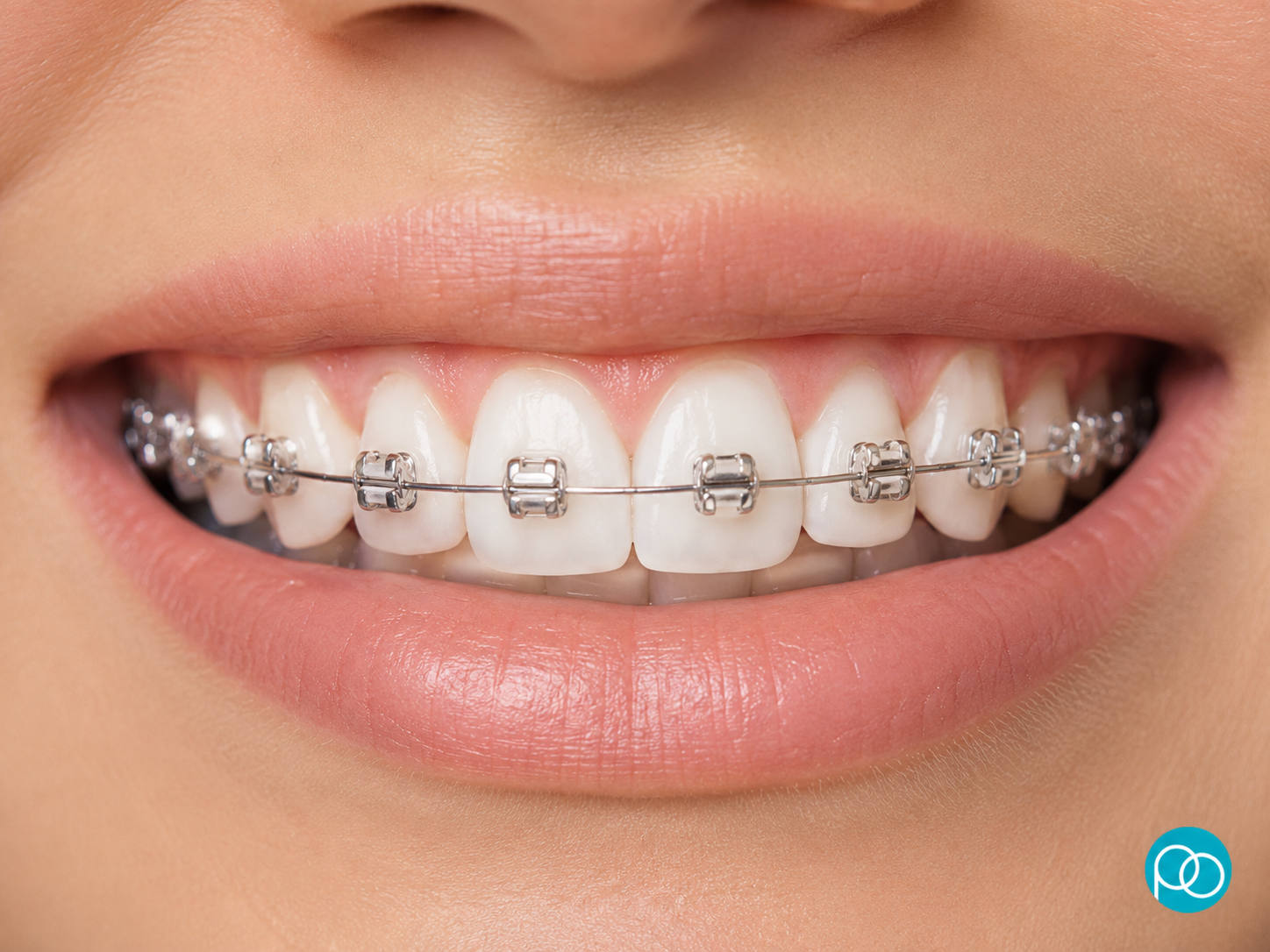
Understanding why braces can make your teeth feel sore often makes the experience much less concerning. Braces work by applying gentle, continuous pressure to your teeth, gradually guiding them into healthier, better-aligned positions.
As that movement begins, the tissues that support your teeth, including the ligaments and surrounding bone, start to adapt. Your body naturally remodels the bone around each tooth, allowing it to move safely and predictably. This normal biological process creates a mild inflammatory response, which is why your teeth may feel tender or sensitive for a few days.
Think of it like the mild soreness you might feel after exercising muscles you haven't used in a while. The soreness isn't a sign of injury, it's a sign that your body is adapting. Orthodontic treatment works in much the same way.
In other words, temporary soreness is a normal part of the tooth movement process. It doesn't mean anything is wrong. In fact, it usually means your body is responding exactly as expected and your treatment is progressing as planned.
What to Expect in the First Week With Braces
The first week is the period when most patients notice discomfort. Here's a realistic day-by-day breakdown of what to expect, based on what our Lake Worth patients typically experience.
Day 1: Placement day
Getting braces is not painful. There are no injections, no drilling, and no invasive procedures. The appointment usually takes about an hour to an hour and a half. Most patients leave feeling perfectly fine, although they may notice that their teeth feel a little different or that they're simply more aware of the brackets.
Over the next few hours, the braces begin applying gentle, continuous forces that initiate tooth movement. As your teeth and the surrounding tissues start to respond, you may notice some pressure or mild tenderness. This marks the beginning of the adjustment period and is a completely normal part of the process.
Days 2 to 3: The peak
For many patients, Days 2 and 3 are when soreness is most noticeable. Your teeth may feel more tender when chewing, so this is a good time to choose softer foods such as yogurt, mashed potatoes, scrambled eggs, pasta, smoothies, or soup. Some patients also notice mild irritation on the inside of their cheeks or lips as the soft tissues become accustomed to the brackets.
The good news is that this phase is temporary and usually lasts only a few days. If needed, over-the-counter pain relievers can help ease the soreness. Orthodontic wax is also very effective if a bracket is rubbing against your cheek or lip. Simply placing a small piece of wax over the bracket creates a smooth surface and helps prevent irritation. We'll provide orthodontic wax at your placement appointment and show you exactly how to use it.
Days 4 to 7: Rapid improvement
By day 4 or 5, most patients notice a significant improvement. The initial soreness begins to fade, chewing becomes much more comfortable, and everyday activities return to normal. Any minor irritation from the brackets also improves as the cheeks and lips adapt to their new surroundings.
By the end of the first week, many patients are surprised by how quickly they've adjusted to wearing braces. What initially felt new and unfamiliar soon becomes a normal part of daily life.
Week 2 and beyond
By the second week, braces begin to feel like a normal part of everyday life. Most patients are back to their usual routines and no longer notice their braces throughout the day. The initial adjustment period is behind them, and orthodontic treatment becomes much easier than they expected.
What About Adjustments? Do They Hurt?
Throughout your treatment, you'll visit our office every 6 to 8 weeks so we can monitor your progress and make any necessary adjustments. These visits may include changing your wire, adding or adjusting elastics, or making other refinements to keep your treatment moving efficiently.
The good news is that adjustment appointments are usually much easier than getting braces for the first time. Most patients experience little to no discomfort. Some notice a mild feeling of pressure or tightness for a day or two, while others feel almost nothing at all. Many patients even tell us they like that brief feeling of tightness because it's a reassuring reminder that their braces are working.
Another reason adjustments are typically so comfortable is that orthodontic treatment is never one-size-fits-all. Every patient responds differently to tooth movement, so treatment should be tailored to each individual's needs and comfort level.
At every appointment, Dr. Parsons personally evaluates your progress, how your teeth are responding, and your overall comfort. If you're especially sensitive to tooth movement, we can often make treatment even more comfortable by adjusting the timing of wire changes, modifying the forces being applied, or, for Invisalign patients, slowing the rate of tooth movement by customizing aligner changes when appropriate. Our goal is to move your teeth safely and efficiently while keeping you as comfortable as possible throughout treatment.
Does It Feel Different for Kids, Teens, and Adults?
Age can affect how orthodontic treatment feels, though the differences are usually small. Here's what we've observed over the years at our Lake Worth office, which treats patients ranging from age 7 through adults in their 60s and 70s.
Kids and teens
Children and teenagers often adapt to braces a little faster than adults. Because they're still growing, the bone surrounding their teeth remodels more readily, allowing them to adjust to orthodontic forces more quickly.
Most younger patients experience only a few days of mild soreness after their braces are placed, but it rarely interferes with their normal routine. Children can typically return to school, sports, and other activities the very same day. While they may prefer softer foods for a few days, the temporary tenderness is usually mild and doesn't prevent them from participating in the activities they enjoy. In fact, many children stop noticing their braces within the first week.
College students generally have a similar experience, whether they're wearing braces or Invisalign. Despite busy academic schedules, sports, internships, and active social lives, most adapt quickly and find that their orthodontic treatment soon becomes a normal part of everyday life.
Adults
Adults may notice slightly more tenderness during the first few days after braces are placed, as bone remodeling generally occurs a little more slowly than in growing patients. Even so, the difference is usually small. Most adult patients adjust very well and are pleasantly surprised by how comfortable modern orthodontic treatment is.
Many adults tell us the experience is far easier than they expected, especially compared with the stories they heard from parents or grandparents who had braces many years ago.
Individual differences matter more than age
While age can play a role, individual differences are even more important. Every patient responds to orthodontic treatment a little differently, which is why there is no one-size-fits-all approach. Some patients experience very little soreness, while others may be a bit more sensitive during the first few days of treatment.
That's why Dr. Parsons personally evaluates every patient at every appointment. She carefully monitors how your teeth are responding, how comfortable you are, and whether any adjustments to your treatment plan are appropriate. If you're especially sensitive to tooth movement, treatment can often be customized by selecting lighter orthodontic forces, adjusting the timing of wire changes, or, for Invisalign patients, modifying the frequency of aligner changes when appropriate.
Our goal is to provide treatment that is not only efficient and effective but also as comfortable as possible. Every treatment plan is individualized because every patient is unique.
How to Manage Discomfort at Home
If you or your child experience any temporary soreness during treatment, don't worry, it usually improves within a few days. The following simple strategies can help make the adjustment period even more comfortable. We'll review these with you at your placement appointment and provide orthodontic wax to take home.
Over-the-counter pain relievers
If needed, non-prescription pain relievers such as acetaminophen or ibuprofen can help relieve temporary soreness during the first few days after braces are placed. Always follow the dosing instructions on the package. For younger children, consult your pediatrician or follow the dosing recommendations based on your child's age and weight.
Soft foods
Choosing softer foods for the first few days can make eating much more comfortable. Good options include yogurt, mashed potatoes, scrambled eggs, pasta, oatmeal, smoothies, soups, soft fruits, and soft breads. As the tenderness improves, you can gradually return to your normal diet while continuing to avoid foods that can damage your braces.
Orthodontic wax
If a bracket or wire rubs against your cheek or lip, orthodontic wax provides quick relief. Simply roll a small piece of wax between your fingers and place it over the area that's causing irritation. It creates a smooth surface while your mouth adjusts. We'll provide wax at your placement appointment and are always happy to give you more whenever you need it.
Warm salt water rinses
If your cheeks, lips, or gums feel irritated, rinsing with warm salt water can be very soothing. Mix about one teaspoon of salt into a glass of warm water and gently swish for 30 seconds before spitting it out. You can repeat this several times a day as needed.
Gentle chewing can help
Although softer foods are often more comfortable during the first few days, gentle chewing is actually beneficial. Chewing stimulates blood circulation in the periodontal ligament and surrounding bone, supporting the natural remodeling process that allows teeth to move. As your comfort improves, gradually returning to normal chewing can help your teeth and supporting tissues adapt more quickly to orthodontic treatment.
When Should You Call the Orthodontist?
Temporary soreness, pressure, and mild tenderness are all normal parts of orthodontic treatment, especially during the first few days after your braces are placed. Most patients adjust quickly and do very well.
However, if something doesn't feel right, don't hesitate to contact our office. We'd much rather answer your questions, see you for a quick evaluation, or make a simple adjustment than have you worrying at home.
Please give us a call if:
- Your discomfort seems unusual or doesn't improve as expected.
- A bracket, band, or wire becomes loose or is causing irritation.
- You're having trouble eating or speaking because something doesn't feel right.
- You have any questions or concerns about your braces or Invisalign treatment.
There is no such thing as a "silly question." Our team is always happy to help. Sometimes all you need is reassurance that what you're experiencing is completely normal. Other times, a quick adjustment is all it takes to make you comfortable again. Either way, we're here for you throughout your orthodontic journey.
Do Invisalign Aligners Hurt Too?
Patients considering Invisalign often ask whether clear aligners are more comfortable than braces. For most patients, the answer is yes. Invisalign is generally very well tolerated, although it's normal to feel a mild sense of pressure or tightness when starting a new set of aligners.
Each aligner is designed to move your teeth a very small, carefully controlled amount before you advance to the next tray. During the first day or two with a new aligner, you may notice a snug feeling or mild pressure as your teeth begin adapting to the planned movement. Most patients adjust quickly, and the aligners feel comfortable for the remainder of the wear period.
One of the keys to a comfortable Invisalign experience is wearing your aligners consistently, ideally 20 to 22 hours per day. Consistent wear allows your teeth and the supporting tissues to adapt smoothly to each stage of tooth movement. If aligners aren't worn enough, the teeth may not fully reach their intended position before the next tray is inserted. As a result, the new aligners may feel noticeably tighter or less comfortable because they're trying to move teeth farther than originally planned.
Just as importantly, Invisalign treatment is never one-size-fits-all. Every patient responds differently to tooth movement. Dr. Parsons personally evaluates your progress throughout treatment and customizes your care based on your individual needs, comfort, periodontal health, and how your teeth are responding. For patients with increased sensitivity, reduced bone support, or other clinical considerations, we can modify the frequency of aligner changes and the rate of tooth movement to provide a more comfortable and biologically appropriate treatment experience.
Our goal is to move your teeth as efficiently as possible while respecting your body's natural response to orthodontic treatment. Consistent aligner wear and individualized treatment planning are the keys to achieving a comfortable experience and the best possible results.
How We Help Make Treatment Comfortable at Parsons Orthodontics
Our goal is to make your orthodontic treatment as comfortable as possible from start to finish. Comfort begins with careful treatment planning, gentle orthodontic techniques, and recognizing that every patient responds differently to tooth movement.
At every appointment, Dr. Parsons personally evaluates your progress, monitors how your teeth are responding, and ensures your treatment is progressing comfortably and efficiently. Because orthodontic care is never one-size-fits-all, treatment can be customized based on your individual needs, level of sensitivity, periodontal health, and response to tooth movement. When appropriate, we can adjust the timing of wire changes, select lighter orthodontic forces, or modify the frequency of Invisalign aligner changes to provide the right balance between efficient treatment and patient comfort.
We also believe that one of the best ways to reduce anxiety is through education. Before you begin treatment, we'll explain what to expect, answer all of your questions, and provide practical tips to help you stay comfortable during the adjustment period. And if something doesn't feel right along the way, we're only a phone call away. We'd much rather see you for a quick visit and answer your questions than have you worrying at home.
Modern bracket and wire technology
The braces we use today are much smaller, smoother, and more comfortable than those used decades ago. Combined with advanced wire technology, modern orthodontic appliances are designed to move teeth more efficiently using gentle, controlled forces, making treatment more comfortable than ever before.
Personalized treatment planning
No two patients respond to orthodontic treatment exactly the same way, which is why every treatment plan is individualized. Dr. Parsons personally evaluates every patient at every appointment, carefully monitoring how your teeth are responding and ensuring your treatment is progressing comfortably and efficiently. When appropriate, treatment can be customized by selecting lighter orthodontic forces, adjusting the timing of wire changes, or modifying the frequency of Invisalign aligner changes. We also consider factors such as periodontal health, the biology of tooth movement, your level of sensitivity, your lifestyle, and your individual treatment goals.
Clear communication and preparation
We believe that knowing what to expect makes the orthodontic experience much less stressful. At your placement appointment, we'll explain each step of the process, answer all of your questions, provide orthodontic wax and detailed instructions, and show you simple ways to manage any temporary soreness at home. If questions come up between appointments, we're always just a phone call away and happy to see you if something doesn't feel right.
A private boutique style practice
As a private boutique practice led by Dr. Parsons, a board-certified orthodontist, we're able to provide the kind of personalized attention that's difficult to achieve in a high-volume office. Dr. Parsons personally evaluates every patient at every appointment, carefully monitors your progress, and tailors treatment to your individual needs rather than following a one-size-fits-all approach.
Our team takes the time to get to know each patient, answer questions thoroughly, and ensure you feel comfortable and informed throughout your orthodontic journey. Our goal is not only to create a beautiful, healthy smile but also to make your treatment experience as comfortable and enjoyable as possible.
Frequently Asked Questions
Do braces hurt when they're first put on?
No. Placing braces is not painful. There are no injections, no drilling, and no invasive procedures. In fact, some patients are so relaxed during the appointment that they even fall asleep in the chair. Most patients leave the office feeling perfectly comfortable, with only a slight awareness of the new brackets. A few hours later, as the braces begin gently moving the teeth, it's normal to notice some mild soreness or pressure for the first few days. This temporary tenderness is easily managed with soft foods, orthodontic wax, and, if needed, over-the-counter pain relievers.
How long does the soreness last?
For most patients, any initial soreness is most noticeable during the first few days after braces are placed. It typically peaks around Days 2 or 3, improves significantly by Days 4 or 5, and continues to fade over the first week. By the second week, most patients say their braces feel like a normal part of everyday life.
The good news is that most patients experience little or no discomfort during routine adjustment appointments. Some may notice a brief feeling of pressure or tightness for a day or two as their teeth continue to move, but this is usually mild and often serves as a reassuring reminder that the braces are working.
Is Invisalign more comfortable than braces?
The experience is highly individual, and there isn't a single answer that applies to everyone. Many patients find Invisalign very comfortable because there are no brackets or wires to rub against the cheeks or lips. However, Invisalign aligners still apply gentle pressure to move your teeth, so it's normal to notice some tightness or mild soreness when starting a new set of aligners.
It's also important to remember that many Invisalign patients wear small tooth-colored attachments bonded to their teeth. During the first few days, your lips and cheeks may need a little time to adjust to these attachments, much like they adapt to braces. Fortunately, most patients adjust quickly and soon stop noticing them.
Whether you choose braces or Invisalign, most patients adapt within the first week and find that orthodontic treatment becomes a comfortable part of everyday life.
What can my child do if their braces hurt at school?
If your child experiences some mild soreness during the school day, there's usually no need to worry. The discomfort is temporary and shouldn't prevent them from attending school, participating in class, sports, or other normal activities. Choosing softer foods for lunch during the first few days can make eating more comfortable. If your child wears braces, orthodontic wax can be very helpful if a bracket is rubbing against the inside of the cheek or lip. If your child's school permits it, an over-the-counter pain reliever may also help if needed.
For children wearing Invisalign, it's important to continue wearing the aligners consistently throughout the school day. Consistent wear, ideally 20 to 22 hours per day, allows the teeth to adapt smoothly to each stage of tooth movement and often makes treatment more comfortable.
Most children adjust very quickly to both braces and Invisalign. If your child seems unusually uncomfortable or something doesn't feel right, simply give our office a call. We'd be happy to answer your questions or see your child rather than have you worrying at home.
Does getting braces off hurt?
No. Removing braces does not hurt. The brackets are gently detached using special orthodontic instruments, and the remaining adhesive is carefully polished from your teeth. Most patients describe the experience as feeling a little unusual because of the gentle pressure during removal, but not painful.
What patients notice most isn't discomfort, it's how different their teeth feel afterward. Many are surprised by how smooth their teeth feel once the brackets are gone. It's common to hear patients say their teeth feel "slippery," "slimy," or even "naked" because their lips, cheeks, and tongue are no longer touching the brackets they've become accustomed to. It's a funny sensation that most people adjust to within a day or two, and the excitement of seeing their new smile usually far outweighs anything else.
What if I have a very low pain tolerance?
Let Dr. Parsons know about your concerns during your consultation. Every patient experiences orthodontic treatment a little differently, and there is no one-size-fits-all approach. Dr. Parsons personally evaluates every patient and can tailor your treatment based on your level of sensitivity, your dental and periodontal health, and how your teeth respond to orthodontic movement.
The good news is that many patients who are most worried about discomfort before starting treatment later tell us it was much easier than they expected.
Related Articles
- Effective Tips to Relieve Braces Pain
- Braces vs. Invisalign in West Palm Beach: How to Choose
- Invisalign in Lake Worth, FL: The Complete Guide
- Why Does My Retainer Hurt?
- Does It Hurt to Get Braces Off?
Ready to Get Honest Answers About Your Treatment?
The best way to feel confident about starting orthodontic treatment is to sit down with a board certified orthodontist who takes the time to answer your questions honestly. Your complimentary consultation with Dr. Parsons includes a full orthodontic examination, clinical photos, and a panoramic x-ray. You'll leave with a clear understanding of your options, what to expect, and how we'll help make your treatment as comfortable as possible. Call us at 561.429.5414 or request an appointment online. Let us design your beautiful smile.

